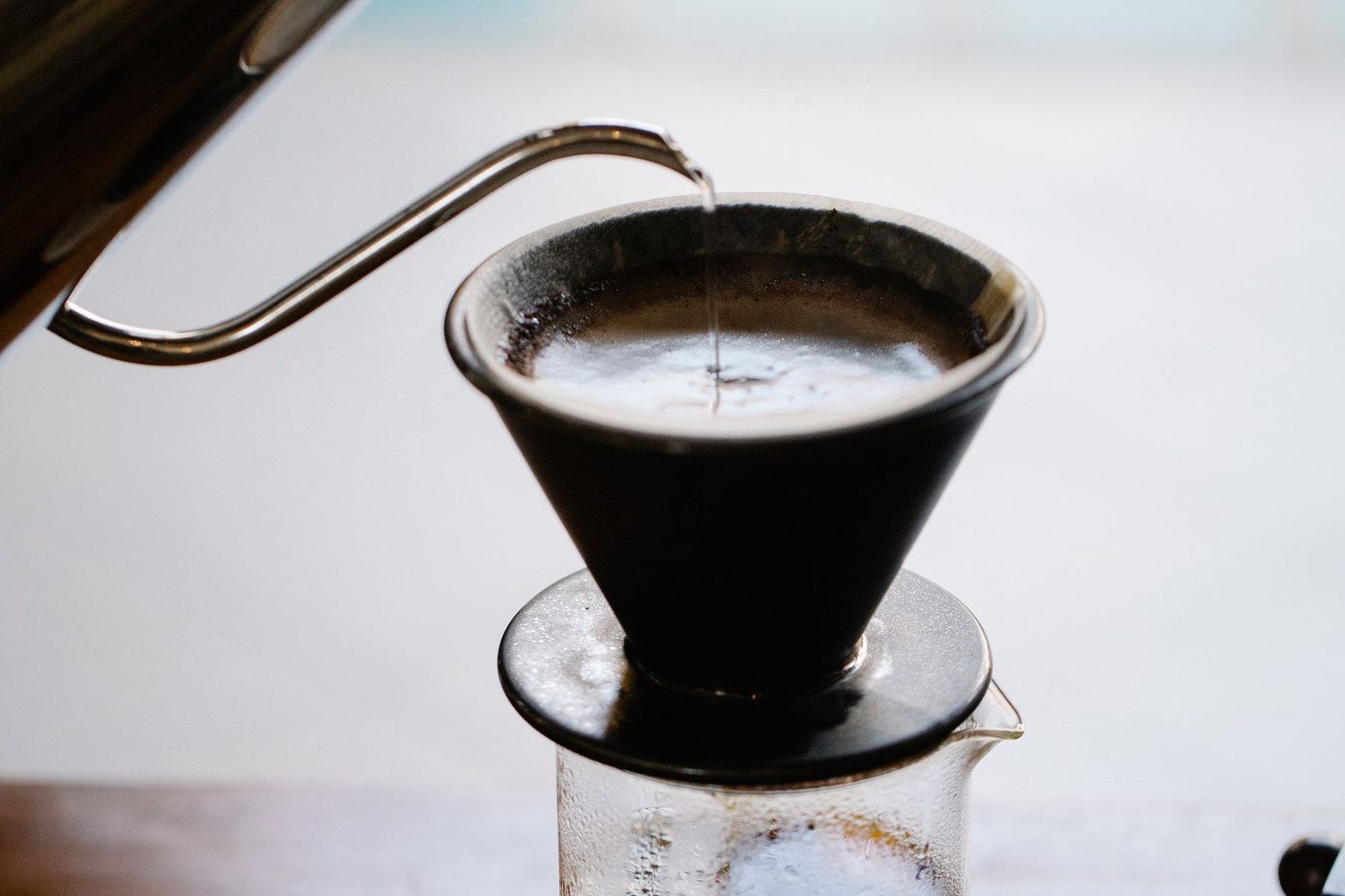
We roast each bag after the order is placed, so your coffee usually arrives only a few days off the roaster. It may be fresh, but that does not always mean it is ready to brew.
Roasted coffee benefits from a period of rest. The right amount of time depends on the roast level and how you plan to brew it.
What Happens After Roasting
Roasting produces carbon dioxide inside the coffee bean. Some of that gas escapes during the roast, while the rest remains trapped in the bean’s porous structure and is released gradually over the following days and weeks. This process is usually called resting or degassing.
A 2018 study in the Journal of Agricultural and Food Chemistry measured degassing by continuously weighing roasted beans as they released carbon dioxide. One dark-roast sample released its gas in two stages. A fast fraction of about 2.2 milligrams per gram was mostly gone within the first day and a half. A larger, slower fraction of about 10.3 milligrams per gram was released over roughly 180 hours.
A light-roast sample from the same study behaved differently. It had no measurable fast stage and released about 5 milligrams per gram through a much slower process lasting closer to 700 hours.

The chart is modeled from the fitted parameters published for two samples in the study. Each percentage represents the share of that sample’s own total gas release. These examples help illustrate the process, but they should not be treated as fixed values for every coffee.
The useful takeaway is that coffee continues to change after roasting, and different roast levels change at different rates. A light roast may still be releasing a significant amount of gas a week after roasting, which can affect extraction and make the coffee taste sharper or less developed than it will a few days later.
Darker Roasts Usually Rest Faster
The study found that degassing generally becomes faster as roast level increases. Darker roasting creates a more porous bean structure, allowing carbon dioxide to escape more readily.
That usually means a dark roast becomes easier to brew sooner than a light roast. The same porous structure can also make it more vulnerable to oxidation, so darker coffee often loses freshness sooner.
Light roasts tend to release gas more slowly and may need additional time before they become easy to extract evenly.
The type of roaster may also have an effect. Scott Rao has argued that drum-roasted coffees often require less rest than air-roasted coffees because the two roasting methods affect the bean differently. We use a 1.5-kilogram drum roaster, which is one reason our suggested windows begin somewhat earlier than some recommendations you may see elsewhere.
Espresso Benefits From a Longer Rest
Espresso pushes water through a compacted bed of finely ground coffee at roughly nine bars of pressure. When a coffee still contains a large amount of carbon dioxide, the escaping gas can interfere with the flow of water through the puck.
Very fresh coffee may cause the puck to swell or fracture, creating channels through which water passes too quickly. The shot may run fast, blonde early, and taste sour or thin. It may also produce a large amount of crema, although heavy, unstable crema is often a sign of excess gas rather than a sign of a well-extracted shot.
For that reason, espresso generally benefits from more resting time than other brewing methods.
Filter Coffee Can Be Brewed Earlier
Pour over and drip coffee rely on gravity rather than pressure, and there is no compressed puck. Carbon dioxide still affects the brew. The bloom you see when water first touches the grounds is largely gas escaping from the coffee.
When a coffee is extremely fresh, the bed can swell enough to disrupt the flow of water and create uneven extraction. The effect is usually less severe than it is with espresso, so filter coffee can often be brewed earlier.
Immersion methods such as French press are more forgiving still. Because the grounds are fully submerged and often stirred, much of the gas can escape early in the brew.
Where We Recommend Starting
These ranges are starting points rather than firm rules. Coffee, roast profiles, grinders, water, and personal taste all vary. Try the coffee at different points and pay attention to how the flavor and extraction change.

| Roast level | Espresso | Pour over and drip | French press and immersion |
|---|---|---|---|
| Light | 10–21 days | 7–14 days | 5–12 days |
| Medium | 7–14 days | 4–10 days | 3–8 days |
| Dark | 4–10 days | 2–7 days | 2–5 days |
Within our current lineup, Ethiopia Dogo Sodu is the lightest roast and benefits most from a longer rest. El Mirador, Pacamara, and Sugarcane Decaf fall within the medium range, although the Pacamara is slightly lighter and may need a few extra days. El Mirador Dark is generally ready first.
What Happens as Coffee Ages
Once most of the carbon dioxide has escaped, oxidation becomes the larger concern. A Specialty Coffee Association review of research on coffee staling reports that each 1 percent increase in oxygen concentration increases the rate of degradation by approximately 10 percent. The review also cites research in which trained tasters detected rancidity in coffee stored in air after four months.
In everyday use, a sealed valve bag can protect whole-bean coffee well for several weeks. Carbon dioxide released by the beans helps displace some of the oxygen inside the bag.
Whole-bean coffee can remain enjoyable for a month or longer, although its character will gradually change. The most delicate aromas usually fade first. Over time, the cup often becomes softer, rounder, and less distinct before it develops any obviously stale flavor.
Grind Immediately Before Brewing
Grinding has a greater effect on freshness than a few extra days of resting.
The 2018 degassing study reports that grinding can immediately release a substantial portion of the carbon dioxide remaining in the coffee. Measured losses ranged from about 26 to 30 percent for coarse grinding, 33 to 38 percent for medium grinding, and 45 to 59 percent for fine grinding.
Grinding also creates far more surface area for oxygen to reach. Whole beans change over the course of weeks, while ground coffee can lose much of its aroma within hours.
For the best results, grind only the amount you are about to brew.
Coffee can also be frozen for longer storage. Freeze it whole, dry, and airtight, preferably in portions small enough to thaw once and use. Lower temperatures slow the reactions that cause coffee to age.
Why We Roast to Order
Roasting to order gives the coffee time to rest in your home rather than spending that time in a warehouse.
Every bag includes its roast date and batch number, and the complete roast record for that batch is available on our website. That makes it easy to see how long the coffee has rested and decide when you would like to begin brewing it.
Sources
The degassing measurements, fitted curves, and grinding-loss percentages discussed above come from the first paper listed below. The information about oxygen exposure and rancidity comes from the Specialty Coffee Association literature review.
- Smrke, S.; Opitz, S. E. W.; Vovk, I.; Yeretzian, C. “Time-Resolved Gravimetric Method to Assess Degassing of Roasted Coffee.” Journal of Agricultural and Food Chemistry, 2018. DOI: 10.1021/acs.jafc.7b03310. The grinding-loss ranges reported in the paper are drawn from work by Wang and Lim cited within it.
- Specialty Coffee Association. “What Is the Shelf Life of Roasted Coffee? A Literature Review on Coffee Staling.” Published in SCA News.
- Scott Rao. “Resting Roasts: Is Fresher Better?” Used as the source for the discussion of resting differences between drum-roasted and air-roasted coffee.
The resting windows in the table are our own practical starting points. They are not taken from a controlled sensory study. No published study has established a single ideal resting period for every roast level and brewing method, so these ranges should be treated as guidance rather than fixed rules.