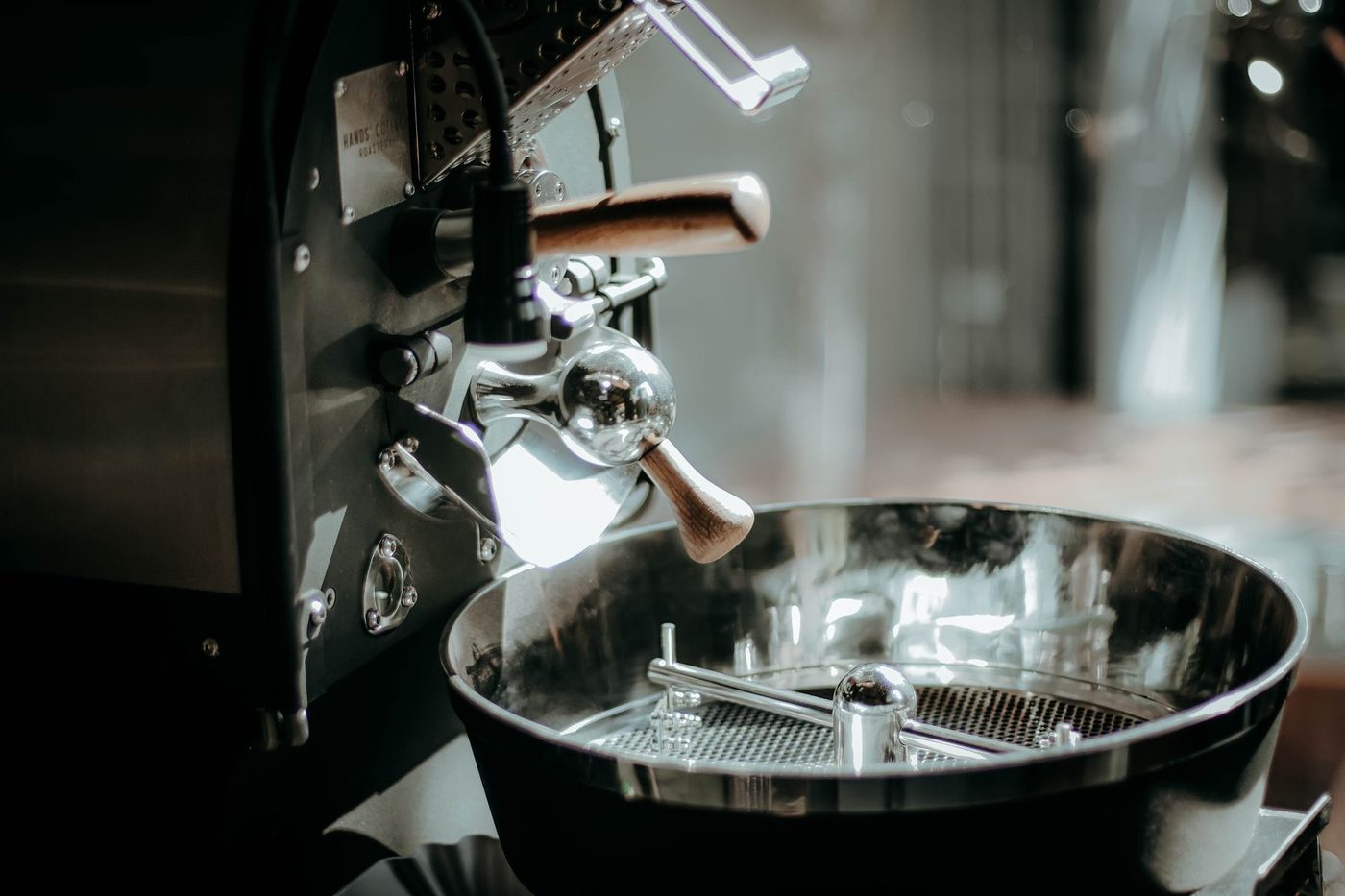
Commercial roasters are measured in bags per hour. Ours is measured in batches per evening. A 1.5 kg drum holds about enough green coffee to fill eight or nine retail bags, which means the coffee you’re drinking came from a roast where your bag was a meaningful fraction of the entire batch.
Small drums get dismissed as hobby equipment. Here’s what they actually buy you.
Every batch is an experiment you can afford to run. On a big machine, a roast that doesn’t work out is an expensive mistake, so roasters standardize early and stop exploring. At 1.5 kg, we can profile a new coffee three different ways in an afternoon, cup them side by side, and commit to the roast that earns it, not the one that’s safest at scale.
Heat moves fast, and so can we. A small drum responds to adjustments in seconds, not minutes. When first crack arrives early, or a dense high-altitude lot wants more push, the correction happens in that roast, not in next week’s batch notes.
Nothing hides. In a small batch, every defect matters and every decision shows. The same logging that big roasteries use to manage consistency across operators, we use on every single roast (batch number, curve, Agtron, development) because at this scale there’s no averaging away a mediocre batch. It either meets the standard or it doesn’t leave the roastery.
The trade-off is honest: we will never be the cheapest bag on the shelf, and some weeks a coffee will sell out until the next roast day. We think that’s the right trade. Small isn’t a stage we’re passing through on the way to a bigger machine. It’s the discipline that makes the coffee worth shipping.