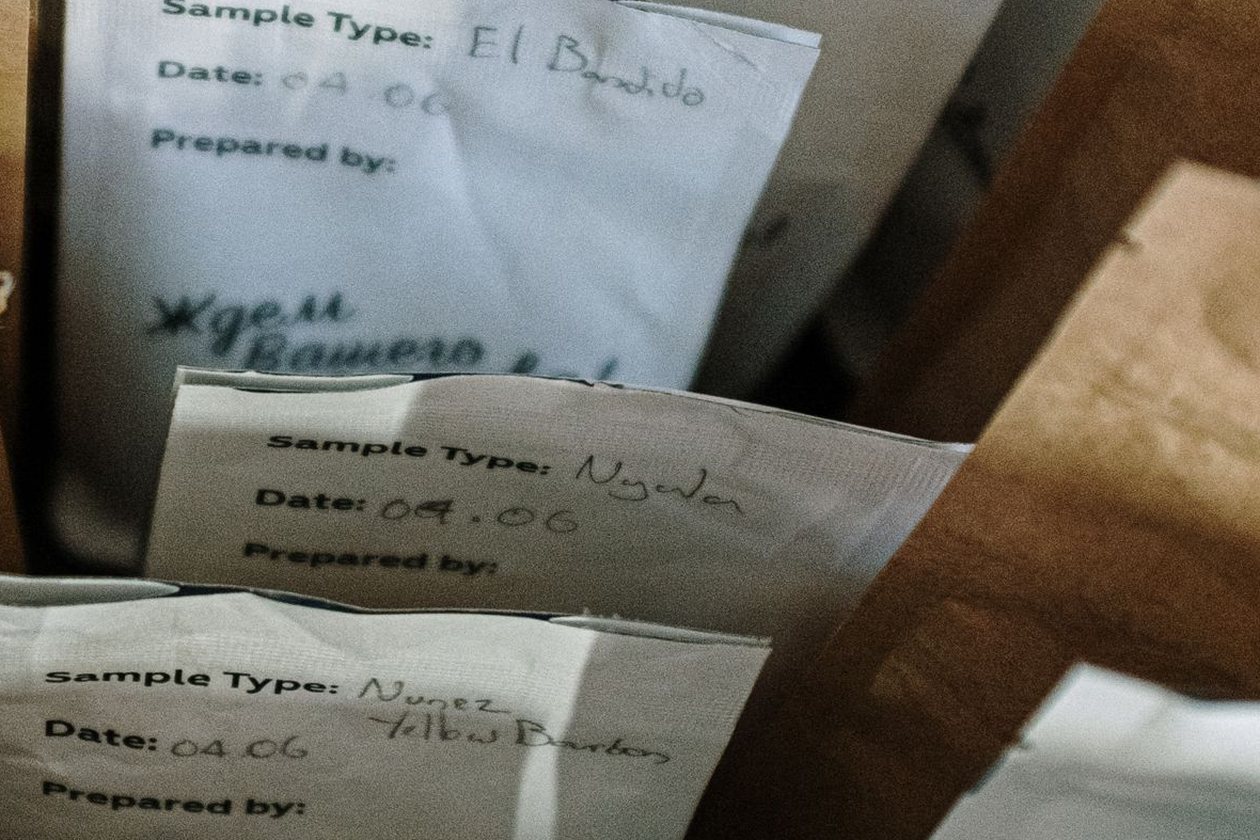
Turn over a bag of our coffee and you’ll find three details most roasters leave off: a batch number, a roast date, and an Agtron score. Enter the batch number on our website and you can see the complete roast record, including the development percentage. We include those details because every roast should be traceable.
Roasting coffee involves many decisions, each of which shapes the flavor of the final coffee. The temperature of the drum when the green coffee goes in, how quickly heat is applied, when first crack begins, and how long the coffee develops afterward all shape the final cup. Even small changes can make the same green coffee taste noticeably different.
The batch number connects every bag to one specific roast and its full record of temperatures, timings, and post-roast measurements. When a batch turns out especially well, we can see what worked and repeat it. When something falls short, we can see that too.
The roast date matters because coffee is a fresh agricultural product. Its flavor changes over time and is usually at its best in the days and weeks after roasting. We would rather give you the actual date than print a “best by” date a year into the future.
Agtron and development percentage deserve a fuller explanation of their own. Put simply, Agtron measures how light or dark the coffee was roasted, while development percentage helps describe the path it took to get there. Together, they give “medium roast” a little more meaning than a label based on color or taste alone.
Small-batch roasting does not guarantee good coffee. Careful, consistent roasting does. These measurements help us repeat what works, learn from what does not, and stand behind every bag we sell so that we can deliver a consistent, high-quality product.