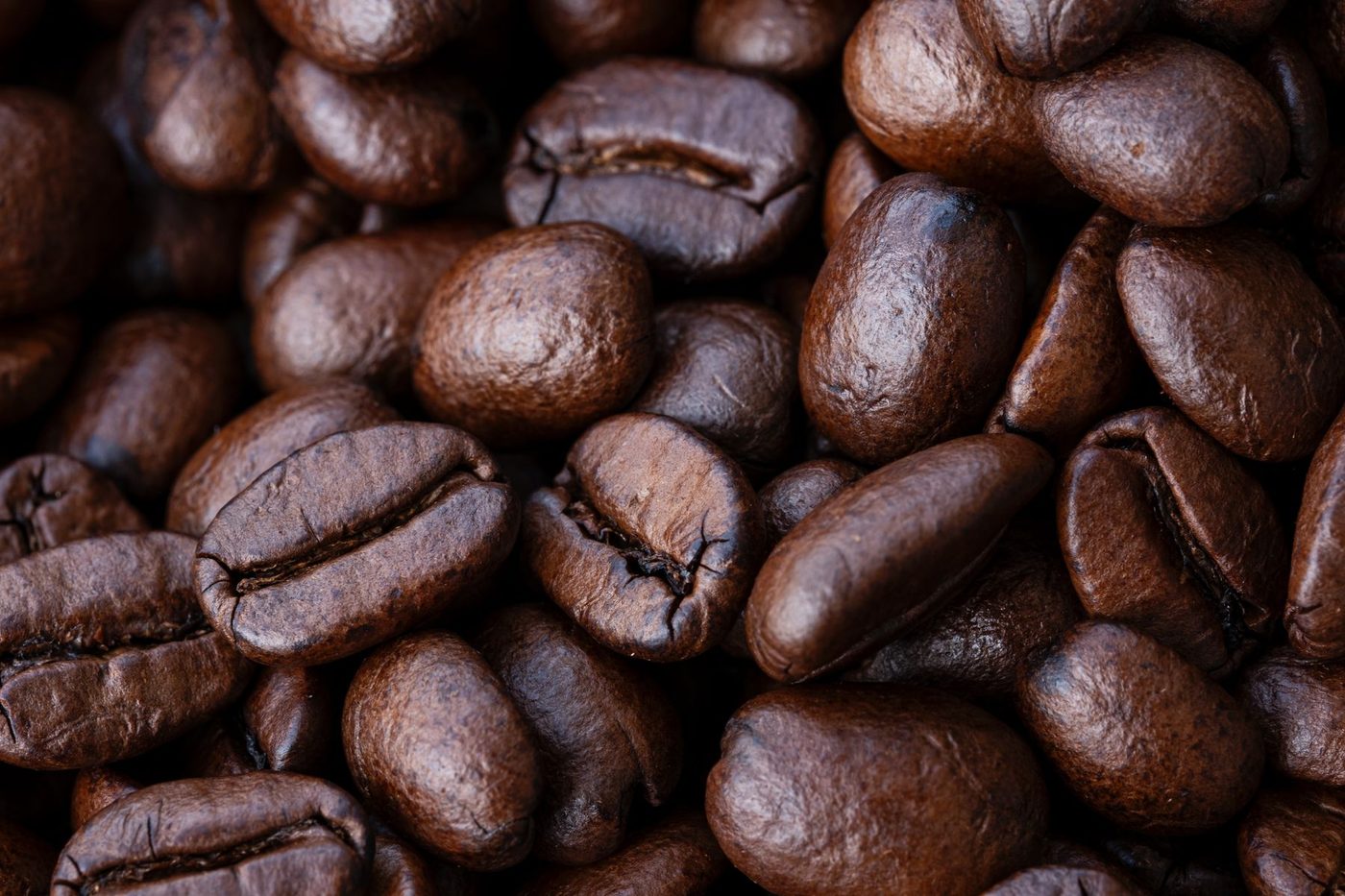
Coffee is usually labeled light, medium, or dark. Those terms are useful at a glance, but every roaster defines them a little differently. An Agtron score and a roast’s development percentage give you a more specific picture of what happened in the roaster.
We print the Agtron score on every bag. The development percentage, along with the rest of the roast profile, is available in the batch record on our website.
Agtron Measures Roast Color
Agtron is an instrument-based measurement of roast color. The analyzer shines light on a prepared sample and measures how much is reflected. Higher numbers indicate lighter coffee, while lower numbers indicate darker coffee. On the scale commonly used in specialty coffee, readings generally run from around 100 for very light coffee into the 20s for very dark coffee.
Color matters because it gives us a repeatable measurement of how far the roast progressed. Our eyes are easily influenced by lighting, surface texture, and the natural color variation within a batch. An instrument gives us a number we can record and compare from one roast to the next.
An Agtron score of 63, for example, falls within what we consider our medium-light range. At that level, we are usually looking for a balance of origin character, sweetness, and body. The fruit, floral, or spice qualities associated with the coffee should remain clear, while the roast adds enough depth to make the cup feel complete.
The score becomes most useful when the samples are prepared and measured consistently. Whole-bean and ground-coffee readings can differ, as can measurements taken with different instruments or procedures. We use the same preparation and measurement process for every batch, allowing us to compare one production roast directly with the next.
Agtron tells us where the coffee finished in terms of color. It does not tell us how the coffee reached that point.
What Development Percentage Means
During roasting, coffee moves through a series of overlapping physical and chemical changes. The beans lose moisture, expand, brown, and produce hundreds of aroma and flavor compounds. Much of that work is already underway before first crack.
First crack is the point when pressure from steam and gases causes the beans to expand and audibly pop. Roasters use it as a practical reference because it is one of the clearest events in the roast. Development time is the period between the beginning of first crack and the moment the coffee leaves the roaster.
Development percentage, often called development time ratio, is that period expressed as a share of the total roast.
A ten-minute roast dropped ninety seconds after first crack would have a development percentage of 15 percent:
1 minute 30 seconds ÷ 10 minutes = 15 percent
This number helps describe how the final portion of the roast was managed. Research comparing coffees roasted to the same final color has found that changing development time can still produce measurable differences in aroma and flavor. In other words, two coffees can share an Agtron score and taste noticeably different because their roast profiles took different paths.
What Happens During Development
The period after first crack gives the roaster a chance to shape the balance among acidity, sweetness, aroma, body, and roast character.
A shorter development can preserve more brightness and delicate aroma, but ending the roast too quickly may leave the cup tasting grainy, vegetal, sharply acidic, or hollow. Extending development can build deeper sweetness and body, although too much time or heat may soften the coffee’s acidity, mute its aromatics, and introduce heavier roasted or bitter flavors.
Time is only part of the picture. The amount of heat entering the beans and the rate at which their temperature continues to rise also matter. Ninety seconds of development with strong momentum is different from ninety seconds in a roast that has nearly stalled. The coffee, batch size, roaster design, airflow, and earlier stages of the profile all affect what happens during that final stretch.
Even first crack is not a perfect dividing line. Browning reactions and flavor formation begin well before it, and they continue after it. Development percentage is best understood as a useful summary of one portion of the roast rather than a complete measurement of how “developed” the coffee is.
That is why there is no ideal percentage that works for every coffee. Many of our roasts finish with development percentages in the mid-teens, but we do not treat that range as a formula. A dense washed Ethiopia may need a different profile from a lower-density natural coffee or a decaf, even when all three finish at a similar color.
Reading the Numbers Together
Agtron and development answer different questions.
Agtron records the final roast color. Development percentage records how much of the total roast occurred after first crack. Looking at both gives us more information than either number provides alone.
Consider two roasts that both finish at Agtron 63. One reaches first crack early and develops gradually. The other reaches first crack later and is dropped soon afterward. Their color may match, but their sweetness, acidity, aroma, and body may not. The rest of the roast log helps explain the difference: temperature, timing, heat application, and rate of rise.
That full record is what allows us to improve a coffee over several batches. When a roast brings out exactly what we hoped to find, we can return to the profile and see how it happened. When the cup is less successful, we have more to work with than a label that says “medium roast.”
The numbers do not replace tasting. Every batch is still cupped and evaluated after roasting. Agtron and development simply give us a consistent way to connect what we taste with what happened in the roaster.
Together with the complete roast log, they help us make the next batch as good as the last one, or better.